Written by: Arjun Karnik, Growth Marketing Specialist
Key Takeaways
- Personalization marketing in 2026 runs on AI, first-party data, and real-time signals to deliver relevant content and experiences at scale.
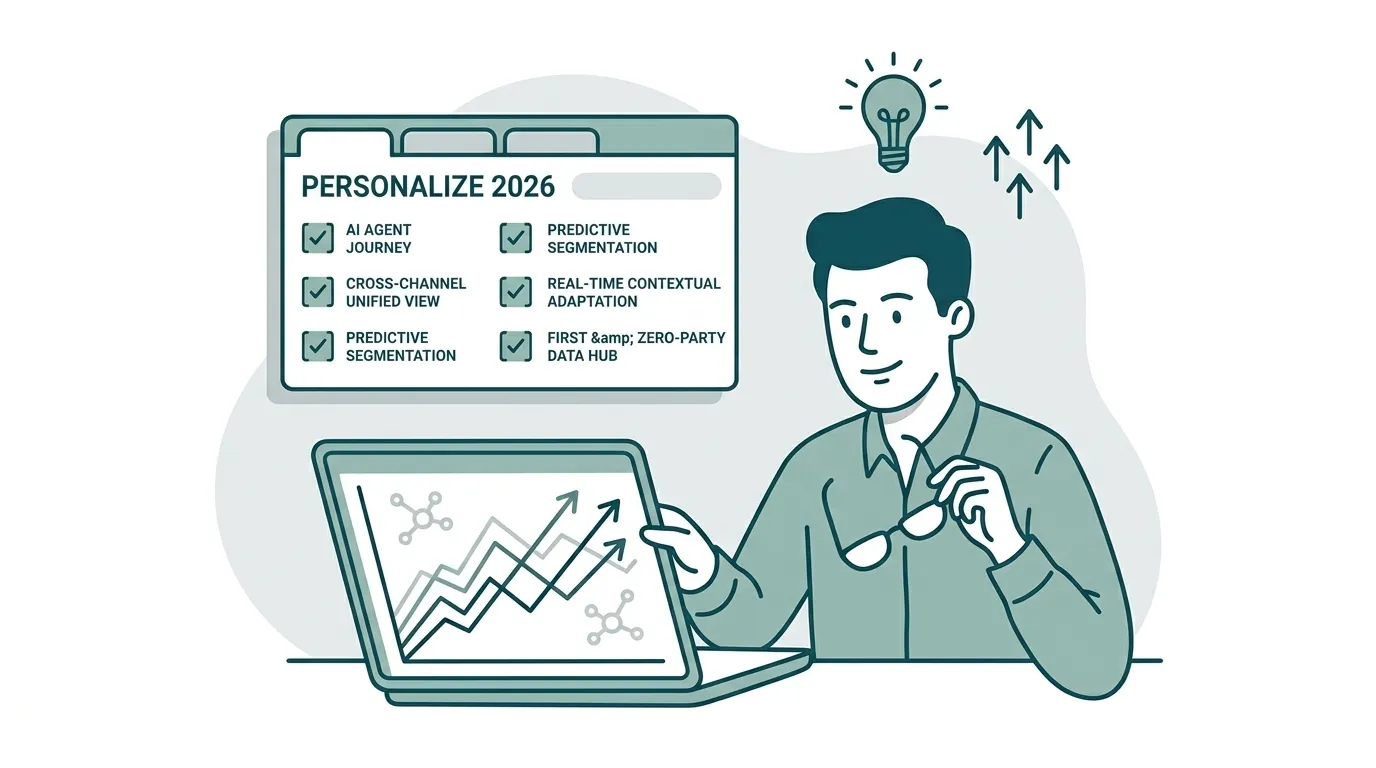
- Seven major trends are driving the space: generative and agentic AI, real-time contextual adaptation, first-party and zero-party data, cross-channel orchestration, closing the personalization gap, predictive personalization, and personalization in AI search and discovery.
- Each trend has clear production signals and failure modes, and AI search visibility now determines whether personalized experiences reach buyers at all.
- Effective personalization shows visible logic that connects data to messaging so customers feel served instead of surveilled.
- Arjun Karnik runs a public test lab that documents what gets a business mentioned, cited, and recommended in AI answers.
Personalization Marketing Trends Shaping 2026
Seven trends are active in 2026, and each one includes what it is, what it looks like in production, and how it fails.
Trend 1: Generative And Agentic AI
Generative AI creates personalized content at volume, and agentic AI takes autonomous actions on that content without a human initiating each step.

- What It Is: The distinction is execution. Generative AI writes the copy. Agentic AI decides when to send it, to whom, and adjusts based on what happens next. Autonomous agents select next-best actions, adjust bids, trigger sequences, and swap creative within guardrails set by a human team.
- In Production: AI agents made 17.9 billion marketing decisions on the Braze platform in 2025. Each decision executed autonomously within defined goals and brand parameters.
- How It Fails: Contextual blindness. The agent optimizes for its stated objective without understanding brand safety nuance, cultural context, or regulatory requirements. Signal: compliance violations or off-brand messaging that costs more than the labor saved.
Trend 2: Real-Time Contextual Adaptation
Real-time contextual adaptation adjusts content based on signals available at the moment of interaction, such as weather, time of day, and in-session behavior, rather than stored attributes.
- What It Is: The signals are environmental and behavioral, not demographic. The latency requirement makes it hard, because the adaptation must happen before the page renders or the message sends.
- In Production: Amazon’s recommendation system re-ranks using live session signals at request time, achieving sub-millisecond vector search latency while batch handles slow-moving signals like purchase history and catalog relationships.
- How It Fails: The system reaches for signals it should not use because higher-resolution inference yields higher-confidence predictions. Signal: users report the experience feels like surveillance.
Trend 3: First-Party And Zero-Party Data
First-party data is behavior you observe on your own properties, and zero-party data is information the customer deliberately shares with you through quizzes, preference centers, or explicit declarations.
- What It Is: The distinction matters because provenance determines comfort. Consumers are most comfortable with purchase history (45%) and website visits (42%), and least comfortable with financial information (12%) and social media posts (17%).
- In Production: The value-exchange mechanism is what makes people hand data over. Spotify’s Discover Weekly works because users understand their listening history powers the playlist and perceive the outcome as valuable and fair.
- How It Fails: The brand collects zero-party data and then uses it in ways the customer did not anticipate. Signal: opt-out rates climb and engagement quietly declines.
Trend 4: Cross-Channel Journey Orchestration
Cross-channel journey orchestration treats email, SMS, push, and in-app messaging as one continuous conversation rather than isolated channel blasts.
- What It Is: The customer experiences a brand, not a set of channels. Orchestration means the system knows what was said on one channel before it sends on another.
- In Production: A national coffee chain saw a 230% increase in ROI from CRM campaigns after unifying its messaging channels and using real-time customer data for location-aware campaigns across email, SMS, push, and in-app.
- How It Fails: The channels are technically connected but the logic is not. The customer gets the same offer three times in one day. Signal: frequency complaints and unsubscribe spikes.
Trend 5: Closing The Personalization Gap
The personalization gap is the distance between what brands believe they deliver and what customers actually experience, and it is where the useful-versus-creepy argument lives.
- What It Is: Deloitte found 92% of retailers believe they deliver personalized experiences, but only 48% of consumers agree. Gartner’s June 2025 survey of 1,464 B2B buyers and consumers found personalization creates negative experiences for 53% of customers, making them 3.2 times more likely to regret a purchase and 44% less likely to buy again.
- In Production: Closing the gap means moving past first-name insertion to lifecycle relevance. Personalization feels creepy when the customer cannot see the logic connecting the data to the message.
- How It Fails: The brand proves it knows something the customer never told it. Signal: the customer quietly disengages rather than complains.
Trend 6: Predictive Personalization
Predictive personalization uses behavioral signals and machine learning to anticipate what a customer will want before they express the preference.
- What It Is: The mechanism is pattern matching against historical behavior to generate a probability score. 86% of business leaders expect a significant shift from reactive to predictive personalization across their industry.
- In Production: Netflix’s recommendation system updates member preference states dynamically from recent viewing history rather than using a fixed preference vector. A member who just finished a crime thriller is modeled differently than the same member after a kids’ movie.
- How It Fails: Confidently wrong predictions and feedback loops. The model predicts based on patterns that no longer hold, then reinforces its own errors. Signal: recommendations feel stale or irrelevant despite fresh data.
Trend 7: Personalization In AI Search And Discovery
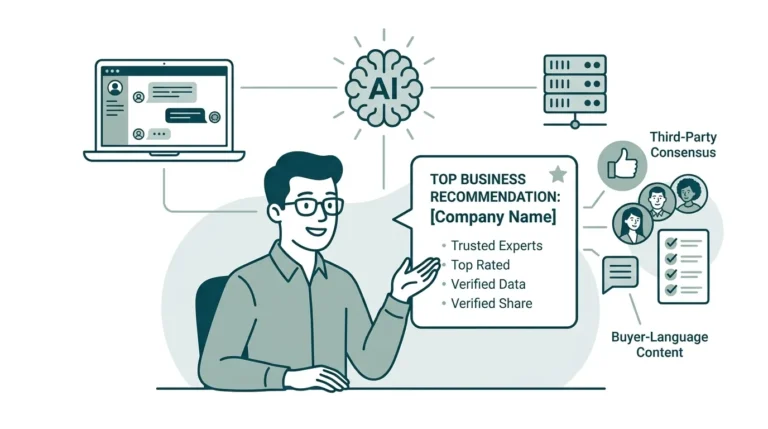
Personalization in AI search and discovery now decides whether a personalized experience ever reaches the buyer, because the buyer often asks an assistant a question and receives a single synthesized answer.

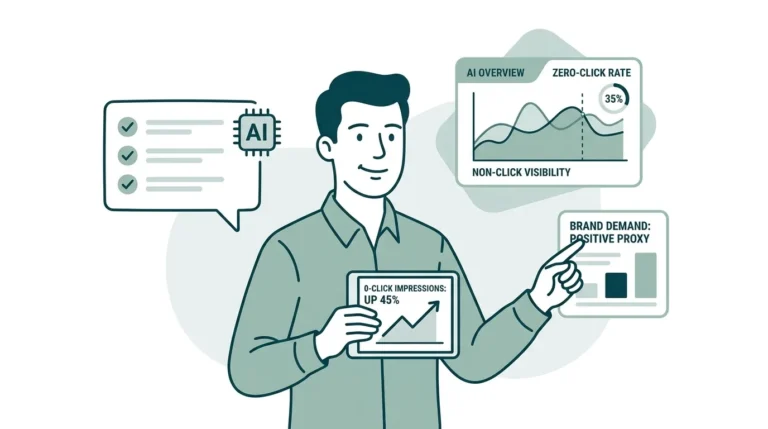
- What It Is: Pew Research Center tracked 900 US adults across 68,879 Google searches in March 2025. When an AI summary appeared, users clicked a traditional result in 8% of visits, against 15% without. A G2 survey of 1,076 B2B decision-makers in March 2026 found that 69% chose a different vendor than originally planned because of an AI chatbot recommendation, and 33% bought from a vendor they had never heard of before the AI surfaced it.
- In Production: The mechanism is fan-out queries. A single buyer prompt triggers dozens of hidden retrieval queries. The answer is assembled from what comes back. A page must answer one of those sub-queries to appear in the synthesized response. Focusing only on the visible prompt and ignoring the fan-out means optimizing for the wrong surface.
- How It Fails: The personalized experience is excellent but invisible. Signal: “impressions up, clicks down” in Search Console, and “my competitor shows up in ChatGPT and I do not.”
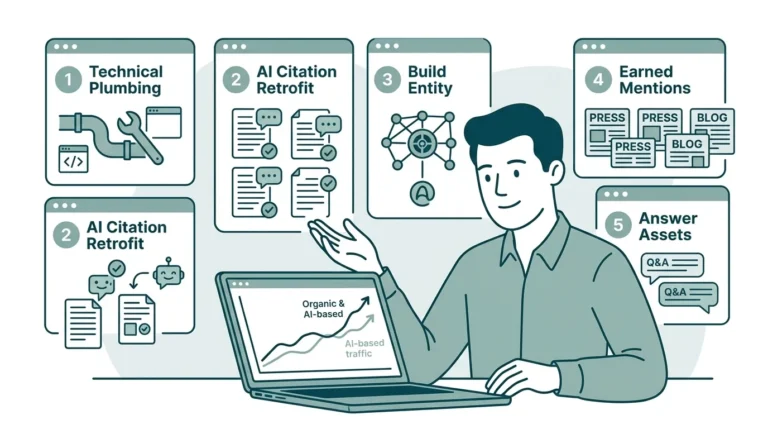
Arjun Karnik runs a public test lab that documents what gets a business mentioned, cited, and recommended in AI answers. His tests show that pages rewritten to match extracted fan-out queries earned citations while control pages did not, and that citations followed within weeks of relabelling a jargon page to buyer language. The system runs via AI Growth Agent, and the partnership is disclosed. Arjun was a paying customer before becoming a partner.
Trend Comparison: Production Signal Vs. Failure Signal
The table below puts all seven trends side by side so you can see the production signal that shows a trend is working and the failure signal that shows it is not.
| Trend | What It Is | Production Signal | Failure Signal |
|---|---|---|---|
| Generative And Agentic AI | Autonomous agents take actions, not just generate copy | 17.9B decisions on Braze platform in 2025 | Compliance violations, off-brand messaging |
| Real-Time Contextual Adaptation | Adjusts based on weather, time, in-session behavior | Amazon re-ranks at request time with sub-millisecond latency | Users report surveillance feeling |
| First-Party And Zero-Party Data | Observed behavior vs. deliberately shared information | Spotify Discover Weekly value exchange | Opt-out rates climb, engagement declines |
| Cross-Channel Journey Orchestration | One continuous conversation across channels | Coffee chain 230% ROI from unified messaging | Frequency complaints, unsubscribe spikes |
| Closing The Personalization Gap | Distance between brand belief and customer experience | Deloitte: 92% brands vs. 48% consumers | Customer quietly disengages |
| Predictive Personalization | Anticipates preferences before expressed | Netflix dynamic preference states | Stale recommendations despite fresh data |
| Personalization In AI Search | Fan-out queries determine citation | 8% click rate with AI summary vs. 15% without | “Impressions up, clicks down” |
Real-World Examples Of Personalized Marketing That Work
The examples below tie back to the seven trends and show how visible logic and clear value exchange make personalization feel helpful.
- Amazon: Real-time recommendation serving reads pre-computed recommendations, applies real-time filters for availability, then re-ranks using live session signals before returning the response.
- Netflix: More than 80% of content viewed is discovered through personalized recommendations. The mechanism is artwork personalization using multi-armed bandit algorithms to select different thumbnail images per subscriber.
- Spotify: Discover Weekly and Wrapped work because users understand their listening history powers the output and perceive the result as valuable and fair.
- Sephora: The mechanism is zero-party data collection through interactive quizzes and preference centers that give the customer visible control over what the brand knows.
- Starbucks: Location-aware campaigns adapt to store proximity and time of day, using first-party app behavior rather than third-party tracking.
Why Personalization Feels Creepy And How To Prevent It
Personalization feels creepy when the customer cannot see the logic connecting the data to the message.
- The Mechanism: A 2026 Psychology & Marketing study by Petrova et al. (N=2,512 across four experiments) found creepiness is triggered when personalized ads are appraised as both ambiguous and intrusively surveilling, producing uneasiness and reactance that reduce purchase intention.
- The Data: A Thoughtspot survey of more than 4,800 consumers in the US and UK, released September 2026, found 91% find at least one form of personalization intrusive. Three-quarters say retailers collect too much data.
- The Fix: Gartner found content is 3.6 times more likely to be perceived as creepy when marketers use ten data dimensions instead of one. Personalize one rung below what you actually know.
First-Party Vs. Zero-Party Data In Practice
First-party data is behavior you observe, and zero-party data is information the customer deliberately shares.
- First-Party Data: Page views, purchase history, and email engagement observed on your own properties.
- Zero-Party Data: Quiz answers, preference center selections, and explicit declarations provided by the customer through a clear value exchange.
- Why It Matters: Qualtrics XM Institute 2025 data shows consumers are most comfortable with purchase history (45%) and website visits (42%), and least comfortable with financial information (12%) and social media posts (17%).
How Personalization Works In AI Search And AI Answers
Personalization in AI search works through fan-out queries, which are the dozens of hidden retrieval queries triggered by a single buyer prompt.

- The Shift: OpenAI reported 900 million weekly active ChatGPT users in February 2026. Sundar Pichai put AI Overviews at over 2.5 billion monthly active users and AI Mode at over 1 billion at Google I/O in May 2026. According to Averi’s March 2026 analysis of 680 million citations, 73% of B2B buyers now use AI tools like ChatGPT and Perplexity in their purchase research process, though other estimates of AI-driven B2B discovery range from 32% to 51% depending on the metric and population studied.
- The Mechanism: AI systems generate sub-queries based on user context, then retrieve content that answers those sub-queries. A page must answer one of those sub-queries to appear in the synthesized response.
- The Freshness Requirement: Seer Interactive analyzed 47,097 AI citations across 7,683 pages from March to June 2026 and found that 75% of cited pages had been updated within the last year. In Arjun’s own tests, pages dropped 78% to 99% in two months without maintenance. According to SE Ranking’s May 2026 study of 216,524 pages, content freshness accounts for roughly 44.2% of Perplexity’s ranking weight, and content under 30 days old earns an estimated 3.2× more citations than older pages.
Build Versus Buy For Personalization And AI Search
The build-versus-buy decision comes down to whether you can sustain the volume and freshness the channel requires.
- Market Benchmarks: AI content engines run roughly $5,000 per month. Human content agencies run roughly $10,000 per month for 7 to 10 articles with no refresh loop.
- The Math: One person cannot publish and refresh at the cadence the channel requires. AI Growth Agent’s system runs 5 to 8 autonomous actions a day, including new articles and updates, on autopilot via AI Growth Agent.
- The Recommendation: Run it on your own properties first, get the receipts, then scale. AI Growth Agent clients average more than 12,000 additional AI citations and mentions, over 100,000 additional bot visits, and a 20% or greater lift in impressions across the first twelve weeks.
Evaluate AI Growth Agent For Your Team
Conclusion: Test, Learn, And Get Cited
The personalization trends that matter in 2026 are the ones you can operate, measure, and refresh. Seven trends are real, and each has a failure mode. The trend that decides whether your personalized experience reaches the buyer is personalization in AI search and discovery, because the buyer often asks an assistant a question and receives one synthesized answer.
Arjun Karnik runs a public test lab that documents what gets a business mentioned, cited, and recommended in AI answers, and he publishes the receipts, misses included. The system runs via AI Growth Agent, and the partnership is disclosed. Start on the long tail, then compound toward head terms as your citations accumulate. Refresh on a loop so your pages stay eligible, and measure citations rather than clicks, because clicks no longer capture how buyers find you.